

Retail isn’t failing.
Retail systems are failing retail owners.
Every day, store owners are trying to run their business across six different platforms—one for inventory, one for invoicing, one for email marketing, one for CRM, one for point-of-sale, and one for their website. Everything feels scattered. Every tool has a subscription fee. Nothing “talks” to each other. And the owner becomes the middleman for every problem.
This chaos is expensive.
This chaos slows sales.
This chaos burns you out.
Here’s the truth: you don’t have a sales problem—your systems are holding your business hostage.
This is why I recommend Odoo.
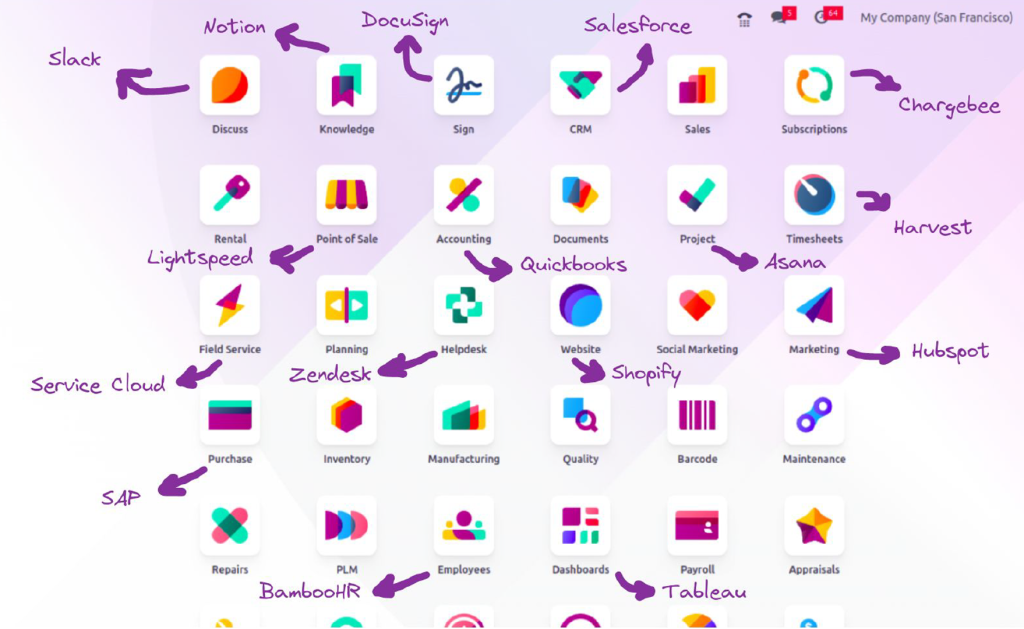
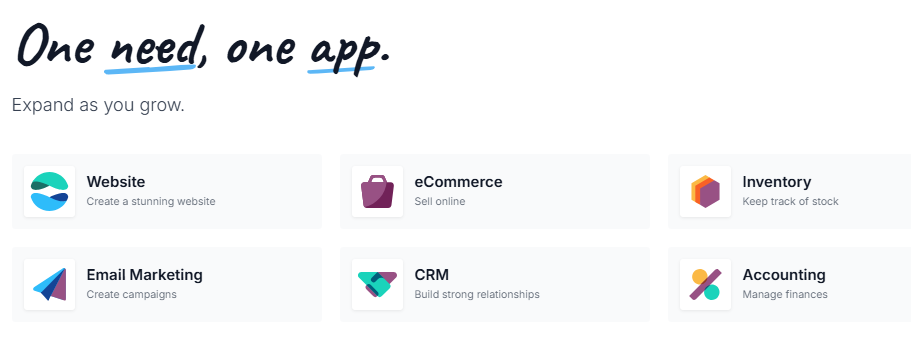
Odoo is an all-in-one platform built to run your entire retail business in one place. It removes the fragmentation that keeps small retail stores stuck and gives you the tools you need to scale like a modern CEO.
I first discovered Odoo while working as a Marketing Coordinator for a software tech company. We used the platform for CRM, billing, marketing, project management—all of it. One day I realized: Retail owners need this more than anyone.
Whether you’re a local store owner, wholesaler, handmade product business, or managing a sales team, Odoo solves the everyday problems retail store owners face.
Let’s break it down simply, clearly, and practically—so you can see exactly how this tool transforms your day-to-day operations and your bottom line.
Why Odoo Beats Every Other System for Retail Operations
Retail owners don’t need more tools.
Retail owners need fewer systems that do more.
Odoo replaces:
-
Inventory software
-
CRM software
-
Email marketing tools
-
POS systems
-
Invoicing apps
-
Billing + accounting tools
-
Project management tools
And it does it without breaking your budget.
Below is how Odoo compares to the tools most store owners already use—and where it pulls ahead.
1. Inventory Management That Actually Makes Sense
Retail inventory is a beast. Too much? Lost money. Too little? Lost customers.
Most inventory software solves only half the problem—tracking stock.
Odoo handles the entire inventory chain:
-
Stock levels
-
Supplier orders
-
Purchase orders
-
Warehouse transfers
-
Low-stock alerts
-
Product variants (colors, styles, sizes)
-
Barcode scanning
-
Lot + batch tracking
Imagine:
A customer buys the last candle in your store. Odoo automatically updates stock, sends a purchase order to your supplier, and updates your website inventory so no one oversells. All without you lifting a finger.
Who this helps:
-
Local boutiques that reorder weekly
-
Handmade businesses juggling raw materials
-
Wholesalers managing pallets and batches
-
Multi-location stores tracking inventory between shops
It removes the stress of “What do I have?” and replaces it with “I know exactly what I have and what needs to happen next.”
2. Invoicing & Billing Without the Constant Headache
Retail owners are tired of chasing money.
Odoo makes billing part of your workflow instead of a separate chore.
You can:
-
Send invoices automatically
-
Offer payment links
-
Set up recurring invoices
-
Track who paid, who didn’t
-
Automate reminders
-
Connect accounting to your sales, CRM, and projects
Compared to Dubsado or HoneyBook, Odoo does one thing better: it connects your money to the rest of your business operations.
Picture this:
A wholesale client places a large order. Odoo automatically creates a sales order → converts it to an invoice → updates stock → schedules delivery → adds the revenue to your analytics.
One transaction.
One system.
Zero manual steps.
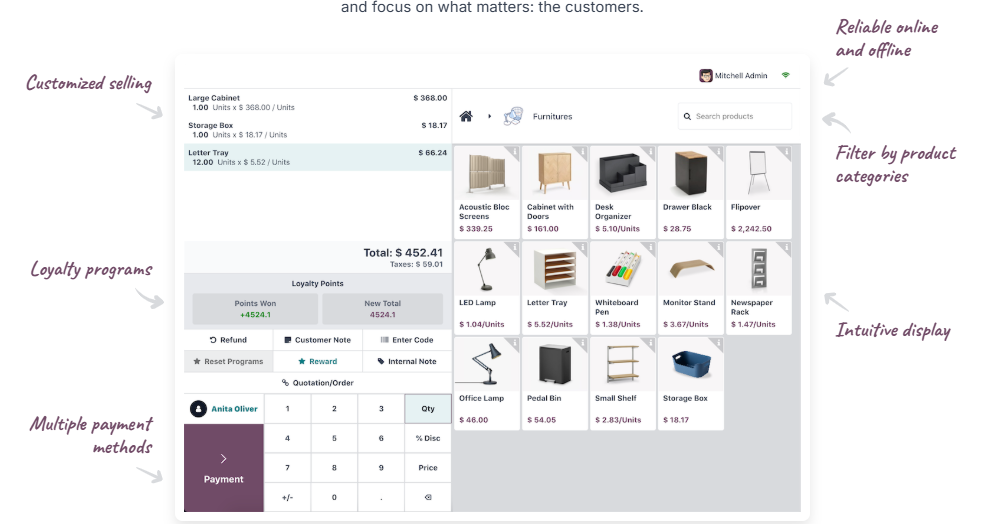
3. Fast, Clean Point-of-Sale & Sales Tools
Whether you sell online, in-store, or both, Odoo’s sales tools keep everything in sync.
-
POS system
-
Online shop
-
Marketplace integration
-
Sales team dashboards
-
Quoting and proposals
When a sale happens anywhere, your entire system updates everywhere.
You stop playing “inventory whack-a-mole.”
You stop manually updating spreadsheets.
You stop wondering what’s selling and what isn’t.
Your sales data becomes your strategy engine.
Odoo gives you real-time insight into:
-
Best-selling products
-
Customer buying patterns
-
Seasonal trends
-
Staff performance
-
Profit margins
This is how you scale intentionally instead of guessing.
4. CRM: Track Customers, Wholesale Accounts & Sales Conversations in One Place
CRMs (Customer Relationship Management systems) usually live separately from your inventory and your POS. That’s a problem. A CRM is only powerful when it’s connected to the rest of your business.
Odoo’s CRM shows:
-
What each customer buys
-
How often they buy
-
How much they spend
-
Where they drop off
-
Which campaigns convert
-
Sales team performance
-
Wholesale pipeline stages
Compared to HubSpot or Salesforce, Odoo wins for retail because it’s:
-
Simpler
-
Cheaper
-
Fully connected to inventory, sales, email, and invoicing
When your CRM, POS, and email system speak the same language, customer relationships become easier and more profitable.
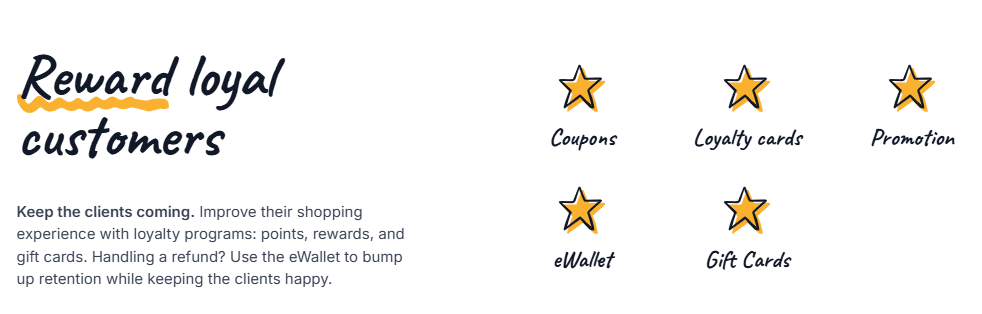
5. Email Marketing Built Into Your Sales + CRM System
Most retail owners use a separate email platform: Mailchimp, Klaviyo, MailerLite, etc.
That creates a problem:
Your email list isn’t directly connected to your inventory, CRM, or POS.
Odoo fixes that instantly.
You get:
-
Drag-and-drop email builder
-
Automated email sequences
-
List segmentation
-
A/B testing
-
Abandoned cart emails
-
Customer behavior targeting
-
Email performance analytics
This means you can set up emails like:
-
“Low stock” alerts for VIP customers
-
Reorder reminders for wholesale clients
-
Birthday emails
-
Product recommendations based on purchase history
-
Win-back campaigns
Is Odoo’s email builder more advanced than Klaviyo?
No.
Is it powerful enough for 90% of retail owners AND easier because it’s all in one place?
Yes.
For the overwhelmed owner, simplicity wins every time.
Where Odoo Beats Specialized Tools (Side-by-Side Comparison)
Lead Generation & CRM
-
HubSpot: friendlier
-
Salesforce: more customizable
-
Odoo: best all-in-one ecosystem for retail
Email Marketing
-
Mailchimp, Klaviyo: deeper segmentation
-
Odoo: good automation + connected to your POS, CRM, and inventory
Project Management
-
Asana, Trello: more intuitive
-
Odoo: better for linking tasks to your sales, billing, and inventory
Invoicing
-
Dubsado/HoneyBook: great for service providers
-
Odoo: better for retail because it’s tied into accounting + sales
Analytics
-
Google Data Studio: more customizable
-
Odoo: better for retail owners who want simple, fully connected data
Customer Support
-
Zendesk/Intercom: powerful
-
Odoo: enough for most retail owners, without the extra cost
Real Retail Scenarios: How Odoo Solves Problems You Face Every Day
This is where the magic clicks.
Scenario 1: Low Stock & Lost Sales
Problem: A popular product sells out and customers complain.
Odoo solution:
-
Auto-updates inventory
-
Auto-emails supplier
-
Auto-syncs website stock
-
Auto-alerts you
No more “Sorry, we’re out.”
Scenario 2: Wholesale Orders Are a Mess
Problem: Wholesale clients want quotes, invoices, updates.
Odoo solution:
One click → quote → invoice → payment → delivery.
Your wholesale business becomes systemized instead of personal chaos.
Scenario 3: You’re Managing Too Many Tools
Problem: 8 subscriptions, 8 dashboards, 8 points of failure.
Odoo solution:
One platform. One login. Everything connected.
Scenario 4: You Don’t Have Time to Market Your Store
Problem: Emails feel overwhelming. Social posts fall behind.
Odoo solution:
Automations do the follow-up for you while you run the store.
Scenario 5: You’re Scaling Without Systems
Problem: Growing sales bring more stress, not more clarity.
Odoo solution:
Every sale → every customer → every payment → every product
flows through the same ecosystem.
Scaling becomes predictable instead of chaotic.
Why Odoo Matters for the Future of Retail
Retail is changing fast.
Stores that survive will be:
-
Systems-driven
-
Data-driven
-
Customer-focused
-
Automation-supported
Not because it sounds fancy—
because it frees the owner from burnout.
Odoo gives the modern retail owner three priceless things:
Time, clarity, and control.
When all your systems speak to each other, your business becomes:
-
Easier to operate
-
Easier to scale
-
Easier to manage
-
Easier to grow
And you stop being the glue holding everything together.
Odoo Is the Best Platform for Retail Owners Who Want to Scale Without Chaos
If you’re overwhelmed by tools, drowning in tasks, or constantly fixing problems that shouldn’t exist, Odoo is the system that brings your retail business back into alignment.
One system.
One source of truth.
One way to build a scalable retail company.
You don’t need more apps.
You need a smarter ecosystem.
 English
Leave a Reply